
Red Flags vs Standards: How to Tell the Difference
Here’s a confusion that quietly ruins a lot of promising connections: people can’t tell the difference between red flags vs standards. Someone gets dismissed for texting “hey” instead of “hey, how’s your day going?” — treated like a character flaw rather than a preference. Meanwhile, actual warning signs like controlling behavior get waved away as “just how they are.” Mixing these two categories up is one of the costliest mistakes in modern dating. Let’s sort it out clearly.
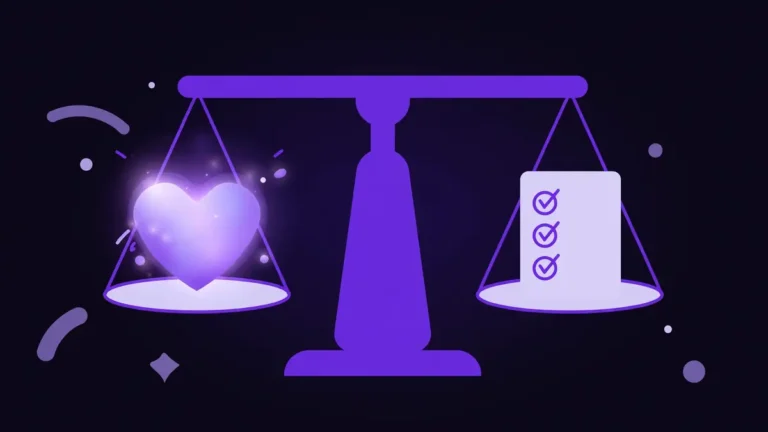
Red Flags vs Standards: The Core Difference
The distinction is simpler than the internet makes it sound:
- Standards are about what you want in a partner and a relationship. They’re preferences — height, career ambition, shared hobbies, lifestyle choices. They’re personal, negotiable, and largely about compatibility.
- Red flags are about how someone treats you and others. They’re behavioral warning signs — dishonesty, disrespect, manipulation, aggression, chronic unreliability. They’re about character and safety, and they’re far less negotiable.
Put another way: standards describe the shape of the relationship you want; red flags warn you the relationship itself may be unsafe or unhealthy. A partner can meet every one of your standards and still be wrong for you because of red flags — and someone can miss a few of your standards while being a genuinely good partner.
Common Standards (That People Mistake for Red Flags)
Social media has blurred this line badly. Here are things people routinely label “red flags” that are actually just personal standards or neutral quirks:
- Texting style. Short replies, slow responses, no emojis — usually a communication habit, not a character defect. Annoying to you? Fair. A red flag? No.
- Hobbies you don’t share. Liking video games, reality TV, or fantasy football isn’t a warning sign; it’s a taste difference.
- Career or income level. Wanting an ambitious partner is a standard. Calling someone’s honest job a “red flag” confuses preference with pathology.
- Minor lifestyle differences. Being a night owl, disliking travel, or having a messy car — these are compatibility questions, not danger signals.
- Not matching your aesthetic. Fashion sense, music taste, Instagram presence — all standards territory.
None of this means you must accept things you dislike. Standards are valid — you get to want what you want. The point is to label them honestly. When you call a preference a “red flag,” you give it a moral weight it doesn’t deserve, and you train yourself to judge people rather than simply notice incompatibility. Our guide to signs your standards are too high can help if you suspect your filter list has grown into a judgment list.
Actual Red Flags (That People Mistake for Standards)
The reverse error is more dangerous: treating genuine warning signs as mere preferences or quirks. Watch for these:
- Disrespect disguised as humor. Constant put-downs, mocking your interests, “jokes” that always punch down at you.
- Controlling behavior. Monitoring your phone, dictating who you can see, getting angry when you have plans without them.
- Dishonesty patterns. Small lies that keep surfacing, stories that don’t add up, secrecy about basic life facts.
- Refusal to take responsibility. Every ex was “crazy,” every conflict is your fault, apologies never happen.
- Love-bombing then withdrawal. Overwhelming intensity early on, followed by cold distance — a classic manipulation cycle.
- Disregard for boundaries. You say no; they push. You set a limit; they test it. This is the big one — how someone responds to your boundaries tells you almost everything.
Notice what these have in common: they’re all about how you’re treated, not about what the person looks like or earns. If you take one thing from this article, let it be that: red flags are behavioral, standards are preferential.
The Gray Zone: When It’s Genuinely Unclear
Of course, real life isn’t always tidy. Some behaviors sit in a gray zone:
Emotional unavailability. Is it a red flag or just a mismatch in what you both want right now? If someone consistently can’t meet your emotional needs and shows no interest in trying, treat it as a flag. If you’re simply at different life stages, it may be incompatibility — a standards issue.
Different relationship goals. Wanting kids vs. not wanting kids isn’t a red flag on either side — it’s a fundamental incompatibility. Don’t pathologize it; just recognize it early.
Rough edges from past hurt. Someone guarded after a bad breakup isn’t waving a red flag; they’re healing. The flag appears only if they refuse to work on it while expecting you to absorb the fallout indefinitely.
The practical test: does this behavior harm me, disrespect me, or make me feel unsafe — or does it just not match my ideal? Harm and disrespect point to red flags. Mismatched ideals point to standards. When in doubt, describe the behavior to a trusted friend without editorializing and listen to their reaction — distance brings clarity.
Why Getting This Right Matters for Your Dating Pool
Here’s the math angle, since that’s what this site is about. Every “standard” you add shrinks your dating pool — that’s just how the numbers work. Try it: run your must-haves through the Male Reality Calculator or the Female Delusion Calculator and see what percentage of people clear all your bars at once.
Now imagine half of those bars aren’t really standards — they’re icks, quirks, and aesthetic preferences you’ve turned into deal-breakers. You’re paying the mathematical price of extreme selectivity without getting the benefit, because the things you’re filtering on don’t predict relationship quality. Meanwhile, the things that do predict it — kindness, consistency, respect, emotional steadiness — can’t be filtered on a checklist at all; they reveal themselves over time.
The smartest dating strategy is therefore counterintuitive: hold your red-flag detection to the highest standard, and hold your preference standards a little more loosely. Be ruthless about how you’re treated; be generous about the packaging it comes in. Our article on adjusting standards without settling shows how to loosen the right filters without compromising what matters.
A Simple Framework You Can Use Tonight
Next time you’re evaluating someone new, run through these three questions:
- Do I feel safe and respected? If no, that’s a red flag — act on it regardless of how attractive or impressive they are.
- Are my objections about character or about preference? “They’re rude to waitstaff” is character. “They don’t dress how I like” is preference. Be honest about which one you’re dealing with.
- Would I still care about this in a year? Texting style fades in importance; contempt doesn’t. Time is the great clarifier — imagine the trait at scale before disqualifying someone over it.
And give promising connections a real chance to reveal themselves. Many people advocate deciding everything by date two; but character — the thing red flags are actually about — takes a little longer to show. That’s one more reason to meet people in real-world settings, where sustained interaction reveals far more than a profile ever could.
Frequently Asked Questions
Can a preference become a red flag?
Rarely, but context matters. A preference becomes flag-adjacent when it’s enforced cruelly — for example, body-shaming a partner for not meeting your physical ideal. The preference itself is a standard; the cruelty is the red flag. Watch the behavior, not just the belief.
How many red flags are too many?
One serious one is enough. Red flags aren’t a points system where three minor ones equal a deal-breaker — a single pattern of disrespect, dishonesty, or control is sufficient reason to walk away. Don’t wait for a collection.
Am I being too picky if I have a long standards list?
Not necessarily — but check the math. Plug your standards into the Male Reality Calculator or Female Delusion Calculator. If your list describes a tiny fraction of the population, make sure each item earns its place by actually predicting your happiness — not just your aesthetic.
What’s the difference between a red flag and a yellow flag?
A yellow flag is something worth watching but not concluding on — e.g., someone seems guarded on early dates. It calls for attention and time. A red flag is a clear negative pattern — disrespect, dishonesty, control — that calls for action. When in doubt, treat it as yellow, observe, and don’t ignore what you see.
Standards help you find someone compatible. Red-flag awareness keeps you safe while you look. You need both — just don’t confuse them. Keep your eyes open for how people act, hold your preferences with a lighter grip, and you’ll date both smarter and kinder.